
Buy Low Price From Here Now
Nicon introduces compact and lightweight high-power zoom lens for Nikon digital SLRs, featuring enhanced Vibration Reduction.
Readmore
Technical Details
- High-ratio, 11x zoom lens and 18-200mm focal range- VR II Vibration Reduction technology provides a four-steps-faster shutter speed
- Lens incorporates two ED glass and three aspheric lens elements
- Delivers high-resolution and contrast, outstanding image quality, and fantastic photographic versatility
- AF-S Silent Wave Motor provides fast quiet autofocusing, and M/A mode makes it easy to switch from auto to manual focus
See more technical details

By Bri (Colorado)
When pointing straight, this lens is a fantastic zoom. It's good with focusing and is relatively quick. Nikon's VR technology is also really good. The only complaint I have is that when I point up or down the lens will start expanding or pulling back on its own based on the gravitational force. I expected to be able to set this lens to a certain barrel length and have it stay there until I changed it.
By G. Tiu
When I first started with DSLR photography I was stoked about this lens
I got it and could not be happier. 18-200mm fast, take it with me everywhere. It sat on my D40 then my D200
Then as a photographer I began to grow. I wanted faster lenses, Prime lenses, etc. Since then this lens has sat in my bag
I got a feel for how I like my pictures to be taken and what I needed was something faster. If i wanted zoom I wanted something further.
Also since i will be moving up to the FX body soon this lens will be useless since it is a DX lens.
As a customer decide if what you plan on doing is moving up in photography and taking it to another level,
or being happy with prosumer DSLRs with DX lenses.
If it is the latter, get this lens
Otherwise invest in fx lenses that will grow with you and this expensive hobby
By D. Bostic
Sorry for the short review but I have had this lens for 3 years and it is hands down the best investment I have made for my camera. you will need no other lens. Buy it NOW!!!!!!
By Nelson Kidd (Camas, WA)
This is a good lens if you only want to take a single lens on vacation. I find myself constantly having to swap my 18-55, 55-200 lenses because I'd snap people, then landscapes, and then architecture, and then animals. This lens has made snapping holiday photos much easier.
Auto-focus is fast and good. If I have problems, it's largely with the auto-focus algorithm in my camera body, not so much the lens.
If you snap with a tri-pod, TURN OFF THE VR. I know it sounds odd, but you'll get a better photo handholding with VR-ON than you will with tri-pod VR-ON. It has to do with the VR algorithm. Essentially, algorithm assumes there's vibration-induced noise and a tri-pod essentially causes it to over-correct. Other than that, the VR is fantastic. Snaps of animals that don't pose look great.
The lens does poorly in close-ups and other short/mid distances. While the center of the image is fine, the outer edges will have a gray/black bordering. You either have to adjust your zoom appropriately or crop it out.
Lastly, this isn't the lens if you're trying to snap a photo as a pro-sumer. Don't get me wrong, your pictures will look fine for things like facebook or standard prints.
This is NOT the lens for larger elegant wall mounted photography...
By Tiffany Ann (Black Diamond Bay)
Beauty is in the eye of the beholder and so, I think, is one's opinion of a camera lens. I've learned over the years that lens reviews are helpful, but they are just opinions. Yes, for sure, you generally get better optics with more expensive lenses, but it's certainly not a guarantee. And for reasons one can only wonder about, oftentimes two copies of the same lens will produce very different results. For example, my friend Sara, who is as nuts about buying (we're like compulsive buyers) and using Canon lenses as I am about buying and using Nikon ones, has a Canon EF-S 18-55 kit lens that produces images so tack sharp through its whole range that would make you cry.
And so it goes with super zooms, these wonderful lenses that go from pretty wide to very long. If you look at the reviews of any of them, some people claim horrible results, while others scratch their heads, because they're just loving them to death.
My first superzoom was a Sigma 18-200 which I got about five years ago and I was blown away with what I could do with just one lens. Plus my shots were pretty darn sharp. The lens was more expensive then, than it is now. It's still a good lens, it weighs a couple ounces less than a pound and if I only could have been satisfied, I'd have saved a bundle of money. Ah well. Anyway, I had an opportunity to try out the Tamron 18-200 as well back then, but I decided on the Sigma. It was a coin toss. At the time I thought both lenses would be good general, all purpose, walkabout lenses. They wouldn't be as sharp or fast as primes and wouldn't be as light as shorter zooms, but heck, one lens which went all the way from 18 to 200mm (okay 27 to 350mm in the real world), such a deal.
Both lenses were five star lenses as far as I was concerned, both still are, because they are what they are, a very good compromise. If you're expecting a lens that will reach out across a dark night and grab a shot of lovers making out by the beach, then you don't want these lenses, but if you're looking for a good general walkabout lens, both will suit you and they won't break your bank.
But they don't have image stabilization and when Sigma came out with it, I had to have it. So I shelved the Sigma zoom I had, (thankfully I didn't sell it) and bought the Sigma 18-200 OS and Sigma's Optical Stabilizer worked great. I got sharper handheld shots in lower light, but they came at a price, almost half a pound. It doesn't sound like much, eight ounces (7.6 to be exact), but try carrying it around on your shoulder all day long. I really noticed the difference, especially when I was shooting.
I probably wouldn't have gone to that auction site with my fairly new lens, if it hadn't been for Tamron. They came out with their Tamron 18-250 and I had to have it. A bigger reach, the heck with image stabilization. Not only could I go all the way from 27 to 375mm in the real world, but I got back a bit over six ounces, the lens was lighter. So now I had two super zooms, which was good, because I go out people shooting with my sister a lot.
So one would think I'd be satisfied, but when the Nikon 18-200 came out, well Nikon optics in a superzoom. I had to have it, so the Tamron went up for auction (because I just loved the Sigma, even though it didn't reach as far). The Nikon lens focused faster, but not that much faster then the other two, had image stabilization and was faster at the long end and it took great shots, but it weighed more than the other lenses, coming in at a whopping 20 ounces and it was creepy, creepy, creepy and with no zoom lock. The other lenses had almost no zoom creep and they had a zoom lock, which I never used. Very annoying the zoom creep was, still, great shots from a great lens.
Satisfied, well for awhile, then came 2008 and the Tamron 18-270 with their VC version of image stabilization and up for auction went my expensive Nikkor lens. Yeah, I still hung on the my first super zoom, the Sigma. For sure the Nikkor was a five star lens, but a girl can't justify more than two super zooms at any one time.
The Tamron lens actually weighed a fraction less than the Nikkor it replaced. It was a bit slower on the long end, was a bit stiff in the zooming, but easy to get used to and almost no, sometimes no, zoom creep and it has a lock. It's just simply one heck of a lens. Sometimes it's a bit slow to autofocus in lowlight, but still I think it finds its focus faster than I would, but not as fast as the Nikkor.
I should add here that Nikon has upgraded their 18-200 adding a zoom lock. I've played with one and not only have they added that zoom lock, but it doesn't seem to creep nearly as much, but that could just be the copy I used. I should also mention that Sigma has come out with their Sigma 18-250 OS which I was lucky enough to use for a month. That is just one super fine lens. It focuses fast and I think it finds its focus better in low light than the Tamron 18-270. Also this new Sigma has a super quiet motor, though I've never really been bothered by the sound of a focusing lens.
By reading other reviews of these lenses, I've learned that they are all subject to zoom creep, so I suppose in the main, I've been lucky. All of these lenses are very good, at least all of the copies I've used. I wouldn't hesitate to recommend any of them. However, if you go with Nikon, you're going to be paying an awful lot more. You get a slightly faster lens on the long end and you get Nikon quality, but Sigma and Tamron give quality as well and Tamron warranties their lenses for six years, so they're pretty confident that they're building a great product (and now they're part of Sony).
So through my whole super zoom experience, which one do I wind up using the most? You guessed it, that Sigma I bought five years ago. Like the proverbial Timax, "It takes a lickin' and keeps on tickin'." If the day is bright and I'm going people shooting it's the one I put on my camera, because it's light and it's images are true.
Images Product
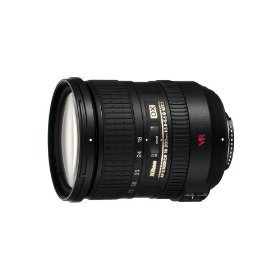
Buy Nikon 18-200mm f/3.5-5.6 G ED-IF AF-S VR DX Zoom-Nikkor Lens Now

No comments:
Post a Comment